

TL;DR
Hotels that accept cash should verify identity, document deposits, and apply the same check-in rules to every guest category. A clear ID scanning workflow reduces manual errors, supports incident review, and helps staff avoid inconsistent treatment at the desk.
Cash is still useful for some hotel guests, but it creates a thinner payment trail than cards, mobile wallets, or corporate billing. Hotel ID scanning for cash-paying guests gives the front desk a consistent way to confirm identity, document the stay, and connect the person at check-in to the room record. For properties that want a practical system instead of loose photocopies and handwritten notes, GuestBan ID Scanning can help standardize guest data capture while keeping the workflow fast.
Table of Contents
What is hotel ID scanning for cash-paying guests?
Hotel ID scanning for cash-paying guests is the process of electronically capturing approved identity document details during check-in when the guest pays with physical cash instead of a card or digital payment method.
ID scanning: A front desk process that reads a driver's license, state ID, passport, or other accepted document to populate a guest record, verify age or identity fields, and create an audit trail.
Hotels use this process because cash payment usually provides less post-stay evidence. A card authorization can link a payer, billing address, issuer, and transaction history. A cash stay may leave only the registration card, deposit record, folio notes, camera footage, and staff memory unless the ID process is consistent.
Key insight: Cash should not trigger a different standard of dignity. It should trigger a clearer standard of documentation.
The goal is not to treat cash guests as suspicious. The goal is to make sure every guest record has enough information for room access, age rules, deposit accounting, incident review, and local compliance. If a guest asks whether they can refuse scanning, staff should have a written answer and a calm script; this guide on whether a guest can refuse hotel ID scanning is a useful companion.
Why do cash stays need tighter identity documentation?
Cash stays need tighter identity documentation because the hotel has fewer payment records to rely on if a dispute, damage claim, safety issue, or policy violation happens after check-in.

A cash transaction can be perfectly legitimate. Still, from an operations view, it shifts more responsibility onto the property's own records. That makes the ID scan, deposit receipt, folio notes, and staff initials more important than they are in a normal card-backed stay.
Risk areas managers should control
- Limited payment trail: Cash does not create the same bank-linked record as a card authorization.
- Deposit disputes: Guests may challenge how much was paid, what was held, or what was refunded.
- Room damage recovery: A scanned record helps connect the registered guest to the stay documentation.
- After-hours handoffs: Night audit staff need facts, not vague notes from the previous shift.
- Underage check-in risk: ID capture supports consistent age verification when local rules or property policy require it.
For age-related workflows, the 2026 guide to underage guest prevention with hotel ID scanning gives more detail on staff scripts and exception handling.
Bruce Schneier's security principle applies well to hotel operations:
"Security is a process, not a product.", Bruce Schneier, Schneier on Security
That process matters more than one device at the desk. If one clerk scans IDs for cash stays and another accepts a handwritten name, the hotel has a policy gap. In my view, inconsistency creates more guest friction than a firm rule because guests notice when standards change from shift to shift.
How should hotels scan IDs without making the policy feel discriminatory?
Hotels should scan IDs without making the policy feel discriminatory by applying the same written check-in standard to all guests in defined categories, explaining the business reason, and training staff to avoid subjective judgment.
The safest policy is not "scan guests who seem risky." That phrasing invites bias, conflict, and uneven enforcement. A better rule is objective: "A valid government-issued ID is required for all adult guests checking in," with added documentation steps for cash deposits, local residents, walk-ins, or after-hours arrivals if those categories are part of the hotel's written policy.
Front desk workflow for cash-paying arrivals
- State the policy before scanning: "We verify ID for all adult check-ins and document cash deposits on the folio."
- Scan the accepted ID: Capture only the fields your policy and system require.
- Match the record: Confirm the name on the reservation, ID, registration card, and deposit receipt.
- Record the cash deposit: Note amount received, receipt number, refund conditions, and staff initials.
- Explain retention: Tell the guest how ID data is stored and who can access it.
- Document exceptions: If a manager approves an exception, record the reason in the PMS or guest record.
- Review at shift change: Night audit and morning staff should see the same facts.
For properties building a written notice, a hotel ID scanning consent form guide can help translate legal and privacy concepts into plain front desk language.
Policy comparison for common payment types
| Payment type | Main hotel record | Added risk | Recommended ID action |
|---|---|---|---|
| Credit card | Card authorization, folio, ID | Chargeback or cardholder dispute | Scan ID and match cardholder policy |
| Debit card | Bank-linked payment, folio, ID | Holds and refund timing complaints | Scan ID and explain deposit release timing |
| Cash | Receipt, folio, ID, staff notes | Weak payment trail and deposit disputes | Scan ID, issue receipt, document deposit terms |
| Third-party booking | OTA record, folio, ID | Name mismatch or virtual card issues | Scan ID and verify reservation ownership |
The table shows why cash needs careful documentation, not harsher treatment. A hotel can be guest-friendly and still insist on proof of identity, a clear deposit receipt, and a complete folio.
How GuestBan ID Scanning handles cash-guest verification
The GuestBan ID Scanning platform helps hotels turn cash-guest verification into a repeatable front desk workflow instead of a judgment call made during a busy check-in rush.
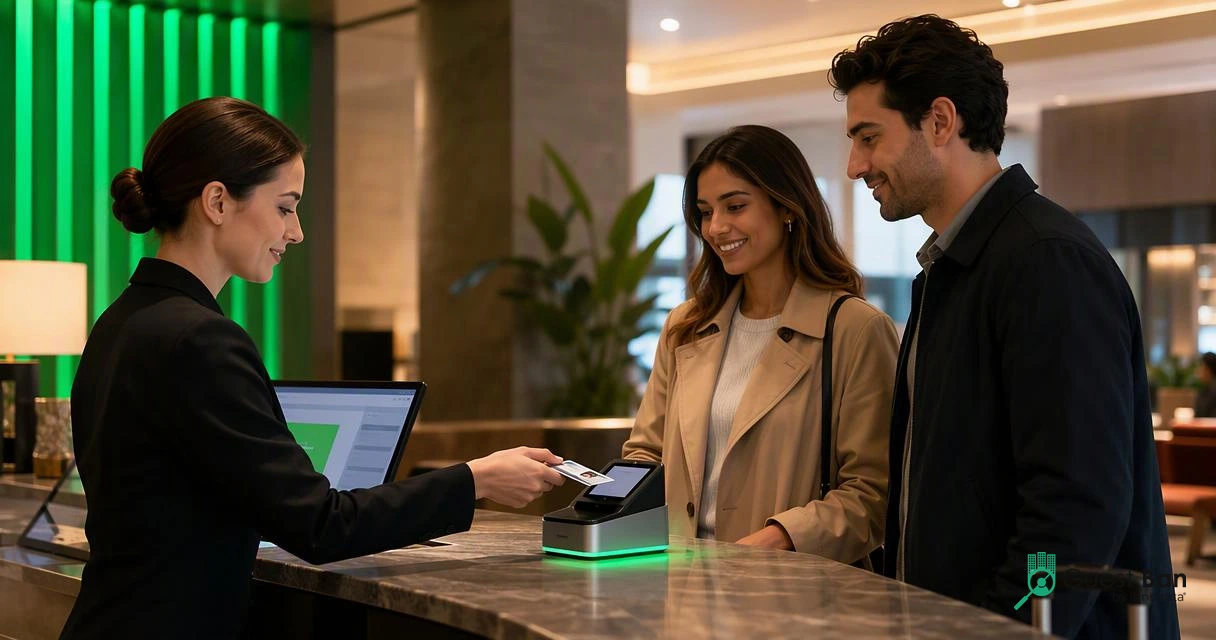
Good scanning software should reduce typing, standardize required fields, and preserve a usable record for managers. It should also fit the way hotels actually work: walk-ins, shift changes, late arrivals, local guest policies, deposits, and incident notes.
GuestBan ID Scanning is designed for hotels that want identity capture tied to risk awareness and operational follow-through. The value is not just "scan an ID." The value is creating a cleaner guest record that front desk, operations, and loss prevention teams can understand later.
What to look for in a hotel ID scanning system
- Fast document capture: Staff should not retype names, dates of birth, and document fields manually.
- Consistent prompts: The system should guide cash deposits, guest notes, and manager approvals.
- Guest record history: Repeat visitors and prior incidents should be easier to review.
- Privacy controls: Access, retention, and permissions should match the hotel's policy.
- PMS fit: The workflow should support existing front desk habits instead of creating double entry.
Research on AI-driven facial recognition in travel and tourism, including the 2022 paper by Shivam Gupta, Sachin Modgil, and Choong-Ki Lee in Information Systems Frontiers, shows why identity technology keeps expanding in hospitality and travel contexts, even as governance and guest trust remain important considerations (Springer PDF).
If your property is evaluating tools, compare scanning speed, record quality, consent language, and reporting before price. GuestBan ID Scanning is strongest when a hotel wants a front desk process that supports safety, repeat-guest awareness, and accountable documentation. You can also read more about scanner ID solutions for hotels or visit guestban.com when you're ready to review options.
What should hotels prepare for in 2026 and 2027?
Hotels should prepare for more automated identity capture, stricter privacy expectations, and more guest questions about why ID data is collected.
The next phase will not be just faster scanners. It will be clearer governance. Guests increasingly understand that their identity documents contain sensitive data, so vague answers like "the system needs it" will not satisfy them. Managers should know what is captured, where it is stored, who can view it, and when it is deleted.
Operational priorities for the next policy review
- Update the written check-in policy for cash, walk-in, local, and after-hours stays.
- Train staff to explain ID scanning in one calm sentence.
- Remove photocopy habits where scanning and secure storage are safer.
- Audit access rights so only approved staff can view ID records.
- Review deposit language on receipts, registration cards, and confirmation emails.
For privacy planning, use a plain-English hotel ID scanning privacy policy template for 2026 as a starting point, then have counsel adapt it to your jurisdiction.
I would also expect more hotels to connect ID scanning with chargeback files, incident reports, and do-not-rent review processes. That does not mean every cash guest is a risk. It means the hotel's records should be strong enough to support fair decisions when something goes wrong.
Frequently asked questions
Is it legal to scan a hotel guest's ID?
It depends on jurisdiction, document type, consent rules, and how the hotel stores the data. Many hotels can request ID at check-in, but scanning creates privacy duties. Managers should define purpose, retention, access, and guest notices before rolling out the process.
Should cash-paying guests be scanned differently from card-paying guests?
Cash-paying guests should not be singled out by appearance, income, or staff instinct. Hotels can apply extra documentation to cash transactions because cash creates a weaker payment trail, but the rule should be written, objective, and consistently applied.
What should staff say when a guest objects?
Staff should keep the explanation short: "We verify ID for all adult check-ins and document cash deposits for guest safety, billing accuracy, and room access control." If the guest refuses, staff should follow the property's written refusal and manager-escalation procedure.
Does ID scanning replace a cash deposit receipt?
No. ID scanning verifies and records identity details, while the cash deposit receipt documents money received and refund conditions. Hotels need both records if they want a clean audit trail for disputes, damages, or shift handoffs.
Conclusion
A cash payment should never turn check-in into guesswork. The practical answer is a clear policy, respectful guest communication, secure data handling, and consistent hotel ID scanning for cash-paying guests across every shift. If your current process relies on photocopies, handwritten notes, or staff memory, review your cash-stay workflow this week, train the desk team, and consider GuestBan ID Scanning as part of a safer guest record system. For a closer look, head to guestban.com and map the workflow against your current PMS and deposit procedures.