

Few problems threaten a hotel faster than a licensing issue. If a city, county, or state regulator warns that your property could lose its operating license, the risk is immediate: no license often means no legal right to operate, rent rooms, or serve guests. Many owners assume revocation happens suddenly, but regulators typically provide warnings, citations, or compliance notices first. Acting quickly during this window can prevent closure. Hotels that respond with a clear corrective plan, strong documentation, and operational controls often avoid the worst outcomes. Platforms like Innstrata Hospitality increasingly help operators track compliance risks, guest incidents, and operational policies before they escalate into licensing problems.
Why Hotels Lose Their Licenses in the First Place
Licensing authorities rarely revoke a hotel license without a pattern of violations. Local governments typically require lodging businesses to meet safety, tax, zoning, and operational regulations. Failure in any of these areas can trigger enforcement actions.
A hotel operating license confirms that the property meets local laws covering building safety, sanitation, and business registration. According to general regulatory guidance discussed by compliance providers such as Wolters Kluwer, revocation usually follows repeated violations or a serious safety issue.
Common Violations That Trigger License Reviews
Most hotel owners facing enforcement notices fall into a handful of predictable categories.
- Repeated health or sanitation violations
- Fire safety failures or expired inspections
- Criminal activity occurring on property
- Failure to renew local business licenses
- Tax or occupancy reporting violations
- Alcohol license violations in properties with bars
How Regulators Escalate Enforcement
Licensing enforcement usually follows a step-by-step process rather than an immediate shutdown.
- Complaint or inspection failure
- Written warning or violation notice
- Mandatory corrective deadline
- Administrative hearing or fines
- License suspension or revocation
Ignoring the early stages often turns a manageable problem into a crisis. For example, operational issues such as poor sanitation can escalate quickly. Articles like this breakdown of hidden hotel sanitation problems show how overlooked maintenance issues can trigger health complaints and inspections.
“Management is doing things right; leadership is doing the right things.”, Peter F. Drucker, BrainyQuote
When regulators step in, leadership means responding fast and documenting every corrective step.
Immediate Actions to Take After Receiving a License Warning
The first 72 hours after receiving a warning or citation are critical. Authorities typically expect a corrective plan, not excuses. A structured response can prevent escalation.
 EditRemove
Step-by-Step Crisis Response Plan
- Review the violation notice carefully. Identify the exact code or regulation cited.
- Contact the licensing authority immediately. Ask for clarification and compliance deadlines.
- Consult a hospitality attorney or compliance advisor. Legal interpretation often matters.
- Document every corrective action. Photos, invoices, and inspection reports help prove compliance.
- Assign internal accountability. A manager should oversee the response plan.
Many regulators will extend deadlines if they see genuine progress. Silence or delay often triggers stricter enforcement.
Operational Systems That Help Prevent Escalation
Hotels that rely on manual tracking often miss early warning signs. Modern operations platforms track incidents, documentation, and guest activity in real time.
For example, the Guest Ban ID Scanning platform helps operators monitor guest behavior, security incidents, and compliance records in one place. Tools like guest ID scanning, incident reporting, and property alerts can create an audit trail if regulators request documentation.
Operators also benefit from stronger front desk verification processes. A guide like best ID scanners for hotel front desks explains how identity verification reduces criminal incidents that sometimes trigger regulatory complaints.
Operational Problems That Often Lead to Licensing Trouble
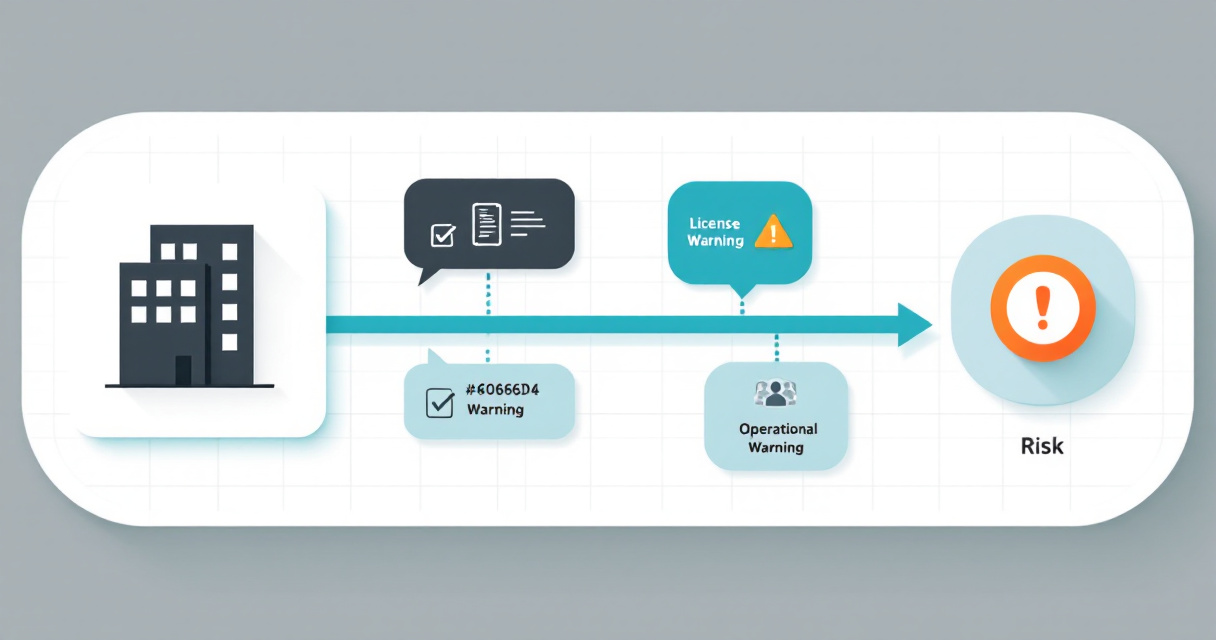
Regulators rarely care about revenue performance or marketing strategy. Their focus stays on safety, security, and public compliance. Understanding the operational areas that most often trigger enforcement can help owners prioritize fixes.
 EditRemove
High-Risk Operational Areas
| Risk Area | Example Violation | Potential Impact |
|---|---|---|
| Safety inspections | Failed fire alarm inspection | Immediate compliance order |
| Sanitation | Mold, pests, or unsanitary rooms | Health department penalties |
| Guest behavior | Criminal activity or disturbances | Police reports and reviews |
| Licensing paperwork | Expired permits or renewals | Fines or suspension |
| Alcohol service | Selling without proper permits | Liquor license revocation |
These issues often overlap. A sanitation complaint can trigger a health inspection, which can reveal fire safety violations, which then lead to licensing hearings.
Guest Incidents That Attract Regulatory Attention
Local governments often act after police complaints or repeated disturbances at a property.
A real example appeared in a report about a police arrest involving a hotel guest, described in this hotel incident report. Incidents like these sometimes push cities to investigate whether a property is properly managing guests.
Hotels can reduce these risks by tracking banned guests, documenting disturbances, and enforcing property rules. Resources like how multi‑property hotels manage DNR lists explain how organized guest restrictions prevent repeat incidents.
Operational transparency matters in every travel business. Hotels that lack internal controls often discover problems only after regulators intervene.
How to Rebuild Compliance Before a License Hearing
When violations escalate to a formal hearing, regulators want evidence that the hotel has fixed systemic problems. A credible recovery plan matters more than promises.
 EditRemove
What Authorities Expect From Your Compliance Plan
Regulatory boards usually want clear answers to three questions:
- What caused the violations?
- What changes prevent them from happening again?
- How will the hotel monitor compliance going forward?
A recovery plan typically includes documented policies, staff training records, and proof of repairs or upgrades.
Key Elements of a Strong Compliance Plan
- Updated safety inspection certificates
- Written operational policies
- Staff training logs
- Incident tracking procedures
- Guest screening processes
Technology platforms can help maintain these records. Using systems like Innstrata Hospitality allows managers to centralize incident reports, guest behavior logs, and operational alerts, which strengthens documentation during inspections.
Documentation Regulators Often Request
| Document | Why It Matters |
|---|---|
| Inspection certificates | Proves compliance with safety codes |
| Incident logs | Shows property management oversight |
| Maintenance records | Demonstrates repairs were completed |
| Guest ID records | Helps track criminal incidents |
“The first rule of any technology used in a business is that automation applied to an efficient operation will magnify the efficiency.”, Bill Gates, BrainyQuote
Structured systems make it easier to demonstrate that your hotel is operating responsibly.
Preventing Future Licensing Risks Through Strong Hotel Governance
Many hotels fix violations temporarily but fall back into the same problems months later. Long-term compliance requires governance, not just repairs.
Build a Simple Compliance Monitoring System
Strong hotels track regulatory requirements like they track revenue metrics.
Key practices include:
- Quarterly internal safety audits
- Monthly sanitation inspections
- Incident tracking and guest behavior monitoring
- Automated reminders for license renewals
- Staff compliance training
Owners who want operational benchmarks can also review guides and resources in the Innstrata Hospitality blog, which covers security practices, operational risks, and hotel compliance strategies.
Financial Pressure Can Lead to Compliance Shortcuts
Hotels under financial stress sometimes delay maintenance or inspections. That approach often backfires when regulators inspect the property.
Instead, operators should maintain strong revenue fundamentals. Improving direct bookings, for example, can stabilize finances and support property maintenance. Strategies like those in this guide on increasing direct bookings help reduce dependence on high‑commission OTA channels.
Compliance Technology Is Expanding Quickly
Hotel compliance tools are becoming more common as cities tighten oversight of lodging businesses. Digital guest verification, automated incident logs, and integrated reporting systems allow operators to demonstrate accountability.
Platforms like Innstrata Hospitality increasingly combine guest screening, incident tracking, and operational analytics. These tools help hotel teams identify patterns early, before complaints escalate into regulatory investigations.
Conclusion
A threatened hotel license should trigger immediate action, not panic. Most revocations follow repeated warnings, which means owners still have time to correct violations, document improvements, and rebuild trust with regulators.
Start by identifying the exact compliance issues, correcting them quickly, and creating a documented operational plan that prevents repeat problems. Focus on safety inspections, guest management, incident tracking, and license renewal processes.
Many hotel operators now rely on operational platforms to monitor these risks continuously. Tools offered by Innstrata Hospitality help properties track guest incidents, verify IDs, and maintain compliance records that regulators often request during investigations.
If your hotel has received a warning or inspection notice, treat it as a strategic reset. Review your operational controls, implement better documentation, and establish systems that protect both your license and your reputation.